
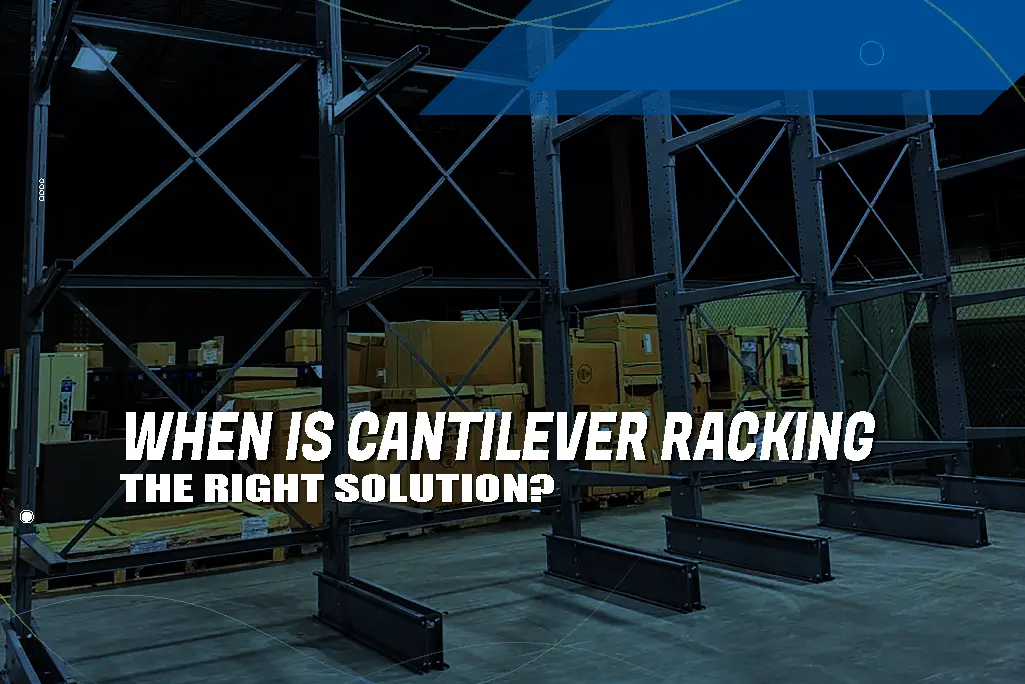
Choosing the right racking system is not just a storage decision. It directly affects workflow efficiency, safety, forklift movement, and long term scalability inside your warehouse.
Cantilever racking is often recommended for specific material types and operational needs, but it is not the right solution for every facility. Understanding when cantilever racking makes sense and when it does not is essential before committing to a layout or installation project.
This guide explains the scenarios where cantilever racking is the right choice, its limitations, and the key layout considerations warehouse managers should evaluate before moving forward.
Why Warehouse Layout Decisions Matter More Than the Racking Itself
Many storage issues are not caused by the racking system itself, but by poor layout planning. A warehouse layout must support:
- Efficient forklift and equipment movement
- Safe loading and unloading operations
- Future growth and inventory changes
- Compliance with safety and operational standards
Installing the wrong system or forcing a system into an incompatible layout often results in congestion, product damage, and unnecessary operational downtime. Cantilever racking performs exceptionally well in the right environment, but only when layout and workflow are planned correctly.
Warehouse Scenarios Where Cantilever Racking Works Best
Cantilever racking is designed to solve very specific storage challenges. It is most effective in warehouses that handle materials with non standard dimensions or loading requirements.
Long or Oversized Materials
Cantilever racking is ideal for storing items such as lumber, pipes, steel bars, panels, and fabricated components that do not fit well on pallets. The open front design allows materials to be stored without cutting or stacking them unsafely.
Variable Length Inventory
Warehouses that handle products with varying lengths benefit from adjustable cantilever arms. This flexibility allows the system to adapt as inventory changes without major reconfiguration.
Side Loading Operations
Facilities that rely on side loading with forklifts or overhead cranes gain significant efficiency from cantilever systems. The absence of front columns makes loading and unloading faster and safer.
Outdoor or Yard Storage
With proper coatings and engineering, cantilever racking is commonly used in outdoor storage yards where long materials need weather resistant and accessible storage.
Situations Where Cantilever Racking Is Not the Best Option
A professional assessment also means knowing when not to recommend cantilever racking.
Cantilever racking may not be ideal when:
- Inventory is fully palletized and standardized
- High density storage is the top priority
- Floor space is extremely limited
- Vertical storage height is restricted by building conditions
In these cases, selective pallet racking, push back systems, or other high density solutions may deliver better performance and space utilization. Choosing cantilever racking in the wrong scenario often leads to underused space and inefficient layouts.
How Cantilever Racking Impacts Forklift Flow and Aisle Design
Because cantilever racking is commonly used with side loading, aisle width and traffic flow become critical design factors.
A well planned cantilever layout considers:
- Forklift turning radius
- Load length during transport
- Clear sight lines for operators
- Separation between pedestrian and equipment zones
Improper aisle spacing or arm configuration can slow operations and increase collision risks. This is why cantilever racking should always be integrated into the overall warehouse layout rather than treated as a standalone system.
Cantilever Racking Compared to Other Storage Systems
Cantilever racking is not a replacement for all storage systems. Instead, it works best as part of a balanced warehouse design.
Compared to pallet racking systems, cantilever racking offers superior access for long materials but lower storage density. Compared to shelving systems, it handles heavier and bulkier items with greater safety.
Many modern warehouses use cantilever racking alongside pallet racks, shelving, or mezzanines, ensuring each product category is stored using the most efficient system for its characteristics.
Cantilever Racking Compared to Other Storage Systems
Structural Stability and Load Safety
Proper installation guarantees correct anchoring, arm alignment, and load distribution, preventing rack deflection, imbalance, and long term structural failure.
Compliance With Safety and Industry Standards
Optimized Layout Integration
Reduced Risk of Downtime and Repairs
Correct installation minimizes future adjustments, repairs, and unexpected shutdowns caused by improper setup or component stress.
Long Term System Performance
A professionally installed cantilever system performs consistently over time, supporting heavier loads, operational changes, and warehouse growth without compromising safety.
Final Considerations Before Choosing Cantilever Racking
Before selecting cantilever racking for your warehouse, evaluate:
- Material dimensions and weights
- Handling equipment used on site
- Available floor space and ceiling height
- Current and future inventory needs
- Overall warehouse workflow
When cantilever racking is chosen for the right reasons and installed correctly, it becomes one of the most efficient and reliable storage solutions for long and oversized materials.
A properly planned cantilever layout improves safety, maximizes usable space, and supports smooth warehouse operations for years to come.