
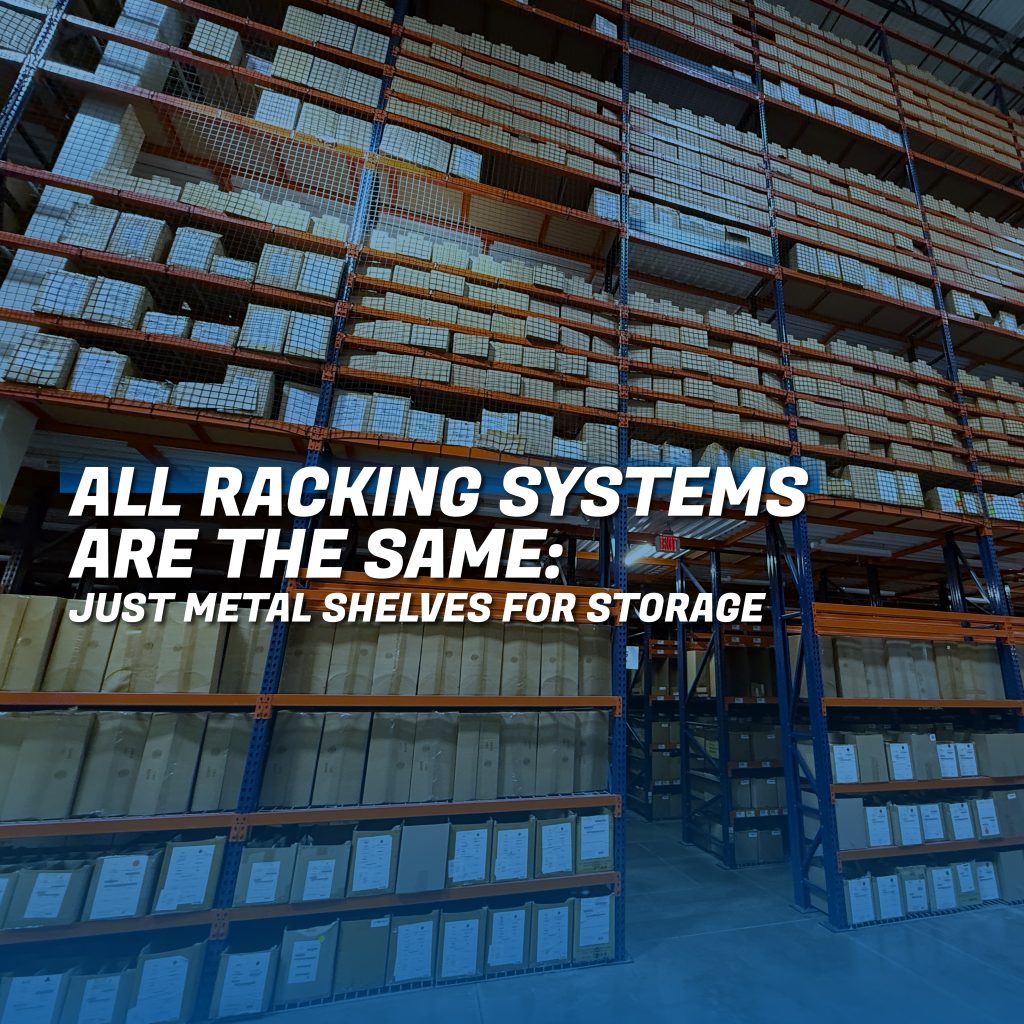
Saying that all racking systems are the same and that they are just metal shelves for storage is a common misconception that can have serious consequences in warehouse operations. Although at first glance racks may seem to perform the same function – holding and organizing goods – the reality is that each system has a specific design, engineering, and purpose that makes it unique and essential for a particular type of operation.
Racking systems are made from different types of steel, various structural profiles, and finishes that ensure their durability and resistance to intensive use, corrosion, and the environmental conditions of the warehouse. The coatings, welding, anchoring systems, and protective accessories are details that make a big difference between a quality rack and one that is not.
There are various types of industrial racking systems: selective, drive-in, push-back, gravity flow, cantilever, among others. Each one meets a specific storage need. For example, a selective rack is designed for direct access and high product rotation, while a drive-in system allows large volumes to be stored with fewer aisles. Using an inappropriate type of rack can result in wasted space, longer operating times, and increased safety risks.
In addition, racking systems are not just metal structures. Behind them are load calculations, safety standards, and international regulations designed to protect both the goods and the integrity of the people working in the warehouse. Poorly designed, installed, or selected shelving can fail under the weight of the load, cause collapses, and result in costly and irreparable damage.
Choosing the right racking system is a strategic decision for any company that wants to optimize its storage space, improve logistics, and ensure a safe environment. It’s not just metal; it’s a solution designed to enhance the efficiency and growth of the business.